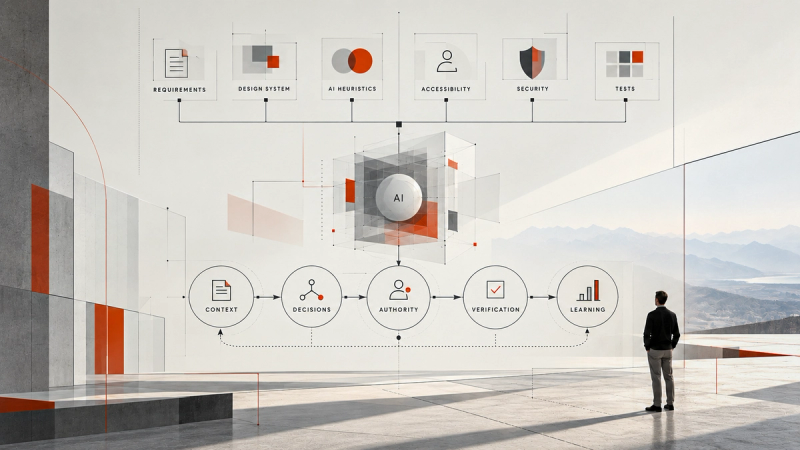
AI is changing UX, but the most valuable design skills remain deeply human, and they’re more important than ever.
- AI will reshape how we work, not why we design.
- Critical, systems, and narrative thinking set designers apart.
- Empathy and ethics are now strategic design tools.
- Future-proofing your UX career starts with sharpening what AI can’t replace.
“So… is UX still going to be a thing?”
Last year, I found a great community on ADPList, talented, curious people, asking big questions.
One question keeps coming back: Is my UX career about to get swallowed by AI?
It’s not just students or juniors.
Seasoned pros, folks with a decade or more in the field, are asking, too.
AI is rising. Fast. And it brings awe and anxiety in equal measure.
Let me say this clearly: UX is not going anywhere.
But, and this matters, it is changing.
Not just in what we do, but in how we think.
Why This Matters
If you’re in UX or product design: sketching wireframes, leading research, or managing a team, you’ve felt the shift.
AI is already in our tools.
It’s generating layouts, summarizing research, and even suggesting “usable” designs.
That can be disorienting.
It makes you question your role, your value, your future.
That’s why we’re talking about it.
I’ve had dozens of these conversations. You probably have too.
This isn’t about comfort.
It’s about clarity.
Once you know what’s coming, you can start steering — not just reacting.
The Machines Are Getting Louder, So You Need to Think Smarter
Here’s what we know:
AI is fast.
It sees patterns.
It scales.
It never sleeps.
But it doesn’t get context.
It doesn’t feel empathy.
It doesn’t know which questions to ask first.
That’s where critical thinking comes in.
Spot the gaps. Challenge the logic. Think beyond what’s obvious.
Add systems thinking to the mix.
UX lives in messy ecosystems — tech, business, behavior, and consequences.
Systems thinkers zoom out. They anticipate ripple effects.
Then there’s narrative thinking — tying data, research, and insight into a story that lands.
That’s what makes a product resonate or a stakeholder finally get it.
AI can deliver facts. Only you can make them matter.
In a world where AI does the work, your value is knowing why it matters and who it affects.
Empathy, Ethics, and the Human Element
UX has always been about empathy.
Understanding people. Solving for them. Making things better.
In an AI world, that human lens matters even more.
AI doesn’t care. It has no ethics.
It doesn’t understand accessibility or inclusion, unless we build it in.
That’s your job now.
Be the conscience in the room.
Ask the hard questions:
Is this good for people?
Who does it leave out?
What’s the unintended impact?
Designing with ethics is your edge.
It protects your value and strengthens your work.
The New Stack of UX Survival Skills
These skills keep surfacing in every conversation:
- Critical Thinking: Question briefs. Spot gaps. Connect dots others miss.
- Systems Thinking: Map complexity. See the whole picture.
- AI Literacy: Know what AI can and can’t do. You don’t need to build it, just understand it.
- Ethical Awareness: Stay sharp on bias, accessibility, and inclusion. Speak up.
- Strategic Communication: Be the translator between users, business, and tech.
You likely have most of these already.
Now’s the time to sharpen them.
UX Isn’t Dying. It’s Evolving.
AI is changing the how: the tools, the workflows, the speed.
But the why of UX? That’s timeless.
People still use products.
Services still need to make sense.
Someone has to shape that experience. That’s us.
Humans designing for humans.
People still need to feel seen. Heard. Understood.
That won’t change.
As long as that’s true, UX will matter.
Thoughtful, curious, principled designers will always matter.
Yes, this moment is big.
Yes, you’ll need to adapt.
But no, you are not obsolete.
You are needed.
You just have to evolve.
“The future is already here — it’s just not evenly distributed.”
William Gibson
Quick Takeaways
- AI won’t replace UX — but it will reshape it.
- Your best skills are human: thinking, empathy, ethics, and systems.
- Stay curious. Stay sharp. Keep asking better questions.