
AI Product Design
Build governable AI
Design AI around useful work, visible evidence, deliberate authority, human control, and recovery.
Recognize the problem.
If two or more of these sound familiar, start here.
S/01
The AI feature exists before its role in the workflow is clear.
S/02
Users cannot tell what the system has done.
S/03
An agent can take consequential action without an explicit authorization boundary.
S/04
Model output is fluent, but the evidence behind it is hard to inspect.
S/05
Failure states depend on prompt instructions rather than product controls.
What changes.
What is different when the work is done — things you can point to, not adjectives.
Change 01
AI responsibilities are separated from human responsibilities.
Change 02
Consequential actions have visible authorization points.
Change 03
Users can see relevant evidence, system state, and recovery paths.
Change 04
Known failure scenarios have product-level controls.
How we work.
Assess. Align. Implement. Iterate. Applied to the work with the most at stake.
Assess
Map users, workflows, evidence, model behavior, authority, risk, and existing failure modes.
Align
Define the AI's role, human responsibility, trust requirements, authorization, and recovery.
Implement
Design workflows, interaction states, evidence presentation, controls, and prototypes.
Iterate
Evaluate behavior, corrections, failures, stale information, and changing user needs.
Proof.
Comparable work, with its provenance stated.
Proof · AI PRODUCT DESIGN · AI Product Design
Governed knowledge for AI.
Context
A governed evidence layer connected approved organizational sources to multiple AI workflows while preserving permissions, ownership, freshness, provenance, and human approval boundaries. A limited pilot validated the core model.
Provenance
UX Design Lab client engagement.Read the case: Governed knowledge for AI. →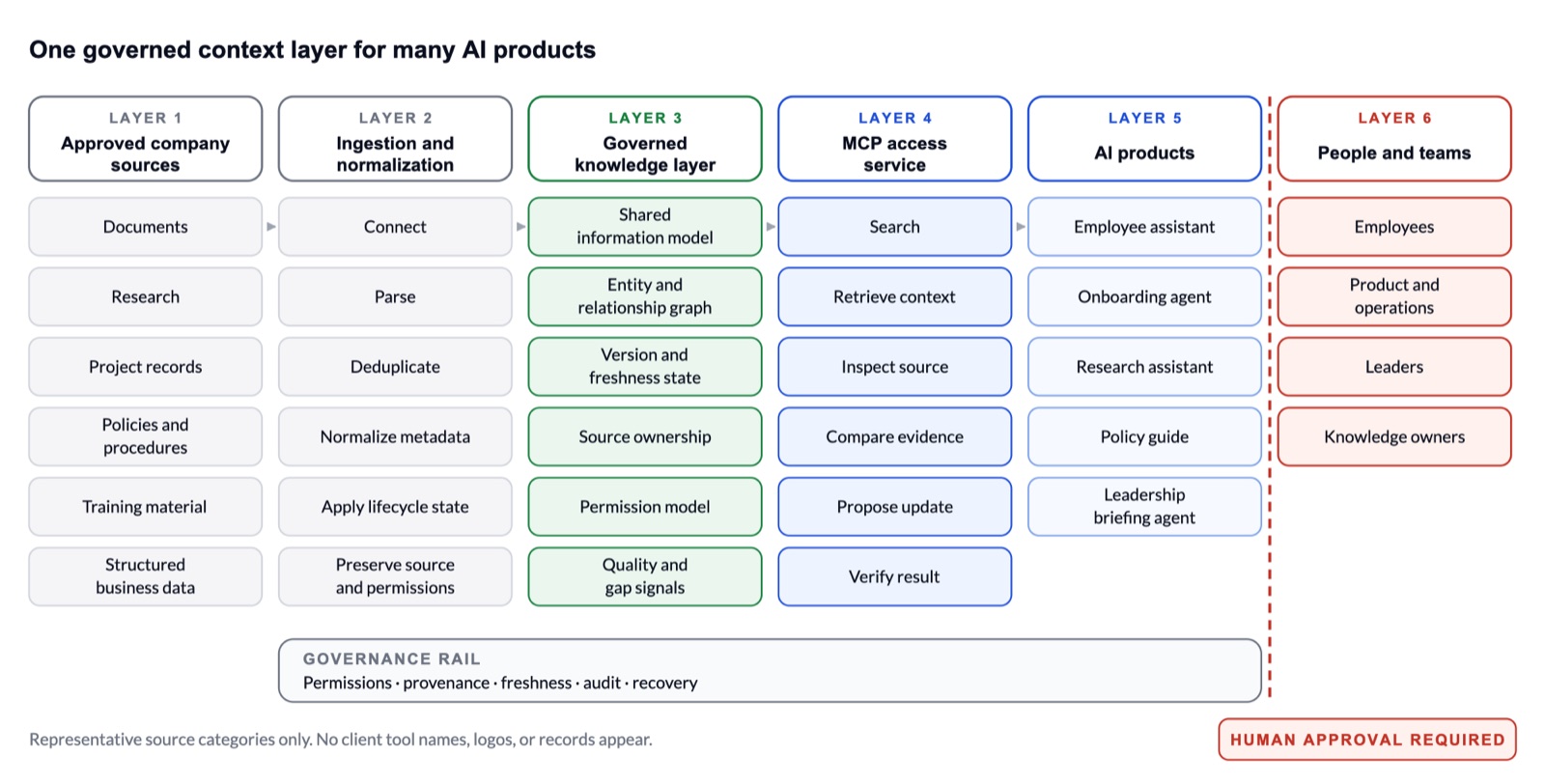
Business pattern
AI becomes a governance problem when answers move faster than evidence, ownership, and accountability.
Included services.
Each has its own page.
Engagement.
Scoped to the problem, not a package.
Common starting points:
- AI product definition
- agent workflow design
- AI product redesign
- governed knowledge architecture
- trust/control review

Senior work stays senior.
You work directly with Pavel Bukengolts, UXDL founder and principal, on assessment, major decisions, and direction. Specialist collaborators join when the work requires additional expertise or capacity.
Recognition
ADPList 100
Recognized among the top mentors on ADPList.
2026 GNTC Tech Educator of the Year
Finalist, Greater Nashville Technology Council.
UX Magazine contributor
Published on product, accessibility and AI practice.
Define the authority before the product gives it away.
Bring the product, workflow, delivery problem, or decision. No polished brief required.
Prefer email? [email protected]
Project inquiry
Thank you — your message is on its way.
I read every inquiry personally and usually reply within one business day.