

- Leadership
- Professional Growth
- Critical Thinking
The Skills We Stop Practicing Are the Skills We Lose
Why attention, conversation, and synthesis still need practice in the age of automation
Briefing · Leadership / Transformation
Regular team meetings are the secret sauce for thriving teams, providing alignment, creativity, and productivity. Don’t skip the sync!

Sailing a ship without a compass is a dangerous endeavour, similar to leading a team without regular meetings. Team meetings are not mere formalities; they are the compass guiding an organisation towards its goals, ensuring alignment, fostering connection, sparking creativity, and driving productivity.
We’ve all seen this: the design leader, overwhelmed by emails, deadlines, and urgent tasks, starts to cancel or postpone regular team meetings and one-on-one check-ins. The intention is to manage immediate fires, but the unintended consequence is a growing disconnect within the team. Without a consistent, safe space to share updates, address concerns, and brainstorm, a toxic culture takes root. The team feels undervalued, uninspired, and directionless.
I once witnessed this firsthand. A leader of the team, caught in the whirlwind of tactical responsibilities, began to frequently cancel our weekly syncs and one-on-ones. Morale dipped, projects slowed down, customers were lost, and politics started to play a major part. The sense of unity we’d worked hard to build began to fray. It was a tough lesson in the critical role these meetings play in keeping a team cohesive and motivated.
To avoid these pitfalls, design leaders must treat these gatherings as sacred rituals, not mundane tasks. Regular meetings are the heartbeat of the team, a vital space where every voice is heard, feedback flows freely, and everyone feels part of something bigger. It’s about building a culture of collaboration and shared purpose.
Here’s an example from my career that underscores this point. I led several distributed teams strategically located across the globe in different time zones, enabling us to deliver faster and create a 24/7 working cycle for critical projects. Our project meetings were held during overlapping hours, ensuring that everyone was aligned on deliverables.
However, it was our regular team meetings that made the difference. These meetings brought together team members speaking different languages and from diverse cultural backgrounds, allowing them to learn about each other. This fostered a great culture and enabled us to work as a single, cohesive team despite the time zone differences and cultural diversity.
The Katzenbach and Smith Model is a useful framework for understanding the dynamics of high-performing teams. According to this model, there are three main components:
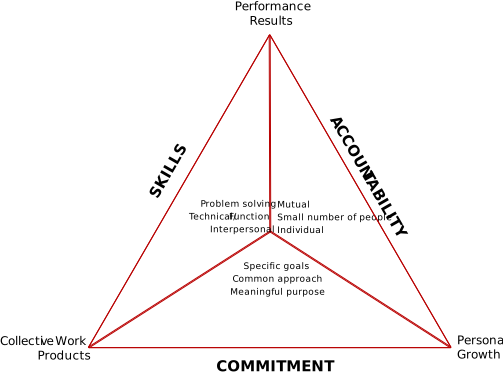
The sides of the triangle and the three internal triangles describe the elements and behaviours that enable the deliverables.
Here are some practices we have used and they have worked exceptionally well:

Team building activity: sailing the San Francisco Bay
“Great teams do not hold back with one another. They are unafraid to air their dirty laundry. They admit their mistakes, their weaknesses, and their concerns without fear of reprisal.” This quote by Patrick Lencioni perfectly captures why team meetings and one-on-one check-ins are non-negotiable.
These meetings foster an environment where collective genius can thrive by building a culture of transparency and openness. When team members feel safe to express their vulnerabilities, it leads to stronger bonds, better problem-solving, and ultimately, a more resilient team.
In the fast-paced world of design, it’s easy to get swept away by immediate demands. However, by keeping team meetings sacred and ensuring one-on-one check-ins happen without fail, leaders can cultivate a culture of trust, clarity, and continuous improvement. So, the next time your calendar fills up, remember the irreplaceable value these meetings bring. They are not just another item on your to-do list; they are the foundation upon which great design and effective teamwork are built. Commit to them, and watch your team thrive. As the saying goes, “Teamwork makes the dream work.” Embrace it, and see your team’s potential unfold.
Listen · AI-narratedSummary
0:00Selected from the same topics.
Why attention, conversation, and synthesis still need practice in the age of automation
AI is changing agency economics by making company knowledge searchable, portable, and easier for small expert teams to use.
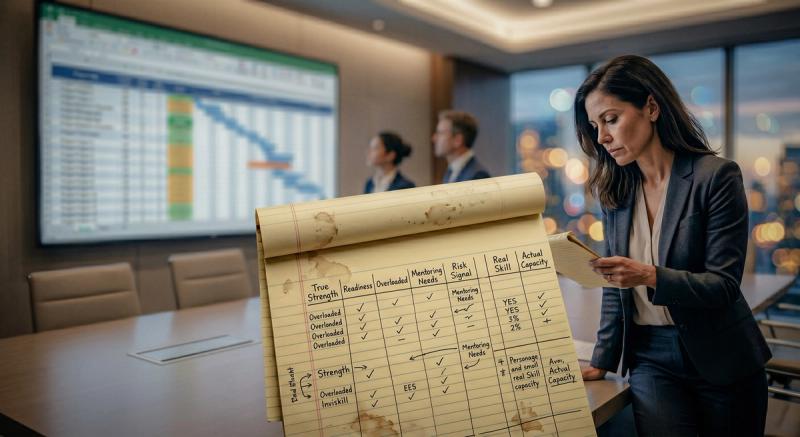
Most teams don’t lack talent. They lack visibility. TCE helps leaders see capability gaps before projects slip and people burn out.
Tell me what you are building, changing, or trying to make better. You do not need a polished brief.
Prefer email? [email protected]
I read every inquiry personally and usually reply within one business day.