
- Critical Thinking
- Decision-Making
- AI
We Want AI. Why?
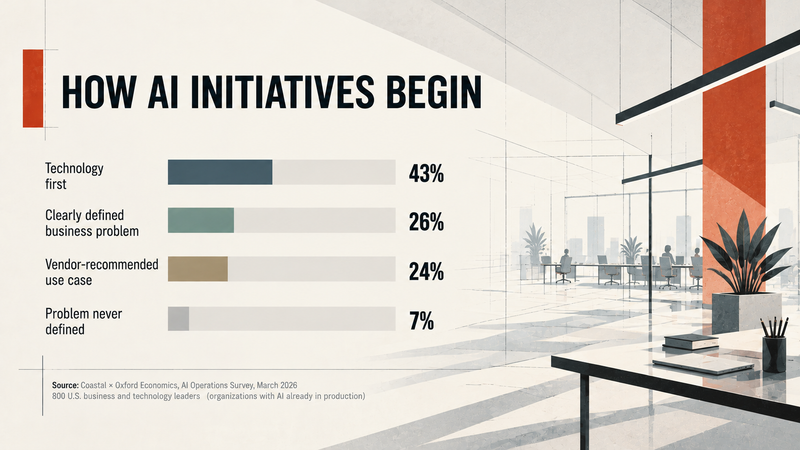
A conversation about AI and research involving 800 leaders raises a familiar question: are we solving a real problem, or finding work for a tool?
Briefing · Leadership / Transformation
Some conversations end without an answer. Research into ghosting offers a perspective on why people avoid saying no and the uncertainty their silence leaves behind.

Listen · AI-narratedSummary
0:00Selected from the same topics.
A conversation about AI and research involving 800 leaders raises a familiar question: are we solving a real problem, or finding work for a tool?

Good product design is less about removing friction than deciding where it belongs. Every trade-off has a cost. The real question is who pays for it.

Life has a peculiar way of reminding us how little we control. Jobs disappear, plans collapse, and the future rarely unfolds as expected. A personal reflection on uncertainty, starting over, and finding the courage to take the next step.
Tell me what you are building, changing, or trying to make better. You do not need a polished brief.
Prefer email? [email protected]
I read every inquiry personally and usually reply within one business day.