
- AI
- AIGovernance
- Systems Thinking
The System Around the Work: Designing for Continuity and Judgment
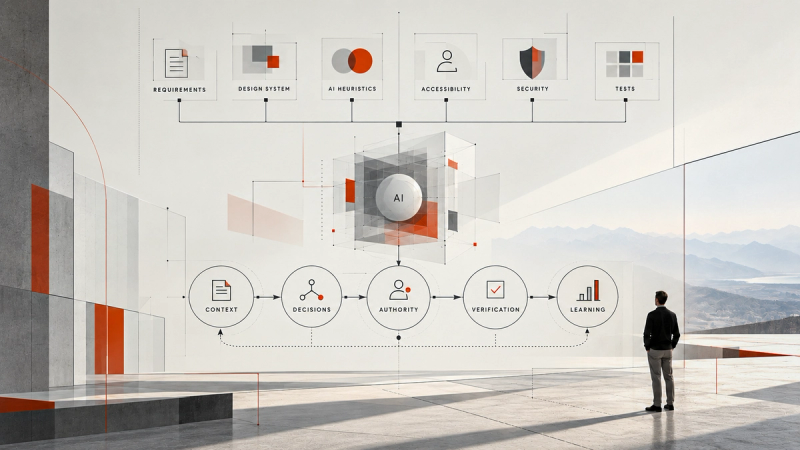
AI makes building easy. The harder problem is creating a system that preserves context, supports judgment, verifies work, and learns over time.
Briefing · Leadership / Transformation
How self-evaluation and Feynman’s Technique can transform individual growth into team success, fostering a culture of learning and collaboration.
Combining self-evaluation with Feynman’s Technique offers a structured approach to fostering personal and team growth. It accelerates personal development and empowers teams to become more cohesive, adaptable, and effective in achieving collective goals.
“Those who know, do. Those who understand, teach.” — Aristotle
In any successful team, self-awareness is essential. It’s more than a trait; it’s the foundation for a collaborative and supportive environment.
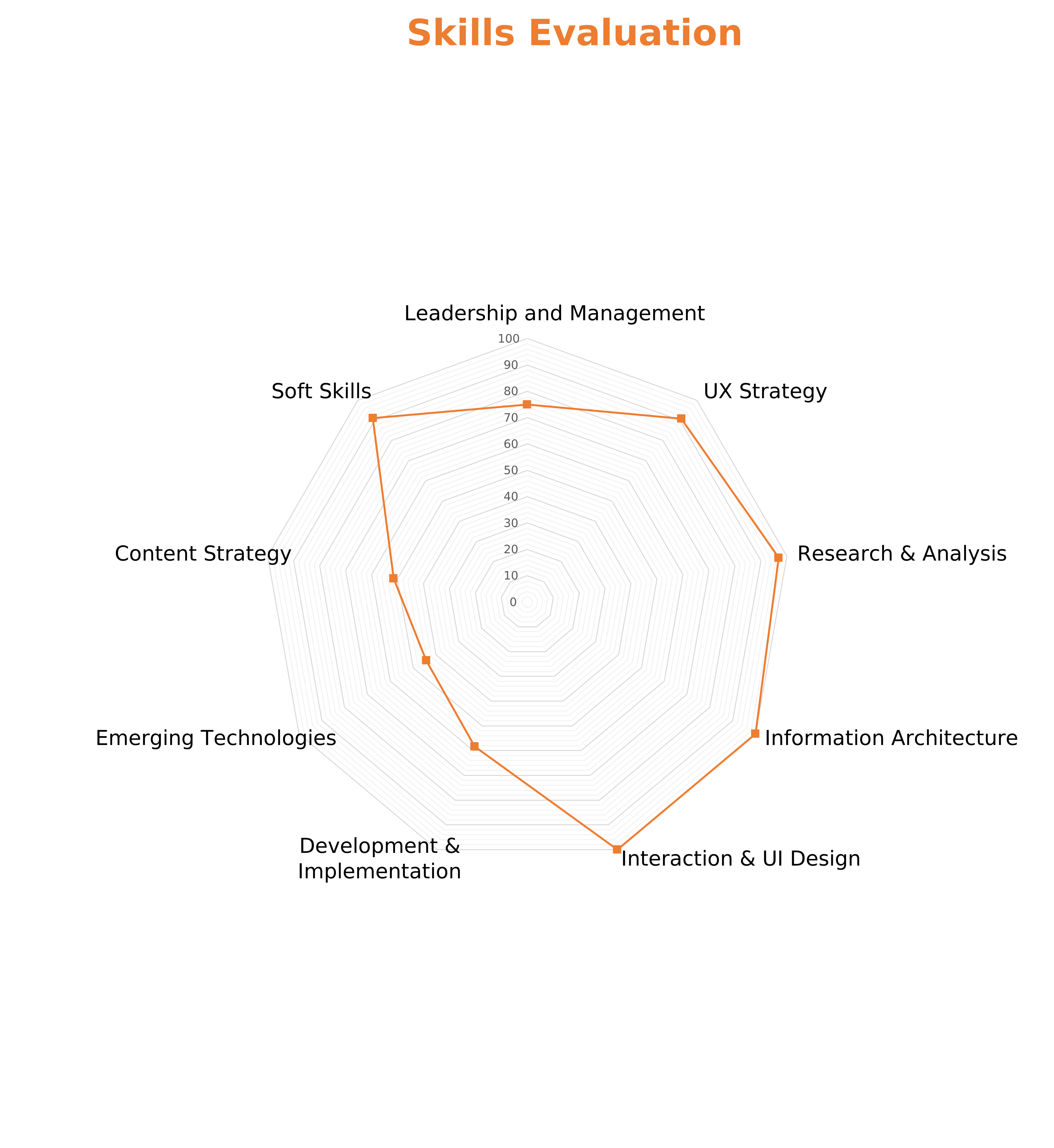
At UX Design Lab, we’ve launched an AI-powered self-evaluation tool. It helps designers understand their strengths and areas for growth. The tool provides a structured, data-driven way to deepen self-awareness. It also drives personal and professional improvement.
Self-evaluation is a cornerstone of professional growth. It reveals where each team member excels and where there’s room to improve. However, turning these insights into action requires a structured approach.
Combining self-evaluation with Feynman’s Technique—a powerful tool for deepening understanding—can transform individual growth into collective success. This approach helps each team member grow while strengthening the entire team.
Self-evaluation is essential for professional growth. It fosters a habit of introspection and continuous improvement. By regularly assessing our contributions and skills, we gain insight into where we add value and where we need development.
Self-evaluation enables team members to understand their strengths and growth areas. It creates an open dialogue within the team about roles, responsibilities, and expectations. This reflective process deepens each person’s understanding of their impact on team outcomes and encourages ownership of their professional journey.
However, knowing what to improve is only the beginning. Without actionable steps, self-evaluation becomes just a reflection rather than a catalyst for progress. This is where Feynman’s Technique offers a practical, step-by-step approach. It bridges the gap between insight and action.
Self-evaluation often identifies personal and professional growth areas, yet it leaves a critical gap: How do we use these insights for real improvement?
For many teams, moving from self-awareness to measurable growth requires a structured process. Without a clear framework, individuals may see their gaps but lack a plan to address them. Feynman’s Technique provides this framework. It’s a learning method that isn’t just theoretical. Teams can apply it practically to benefit everyone.
Feynman’s Technique, developed by Nobel Prize-winning physicist Richard Feynman, is based on learning through teaching and simplifying.
Here’s how it works:
Identify something you want to understand better.
This could be a new skill, a principle, or an insight from a recent project. For teams, it might mean choosing a complex project challenge or a skill needing reinforcement.
The heart of Feynman’s Technique is teaching.
Explain the concept in the simplest terms possible to someone else. Imagine you’re explaining it to a friend or family member. This step forces you to simplify the concept, which reveals the depth of your understanding.
During your explanation, you’ll likely find certain details hard to explain. These are gaps in your understanding. If you can’t make it clear, you may not fully understand it yet. Use this as a signal to revisit those areas, study further, and refine your knowledge.
After filling the gaps, revisit your explanation and simplify it further.
The goal is to create an explanation that even a non-expert could understand. This process not only deepens your comprehension but also makes your knowledge easier to share with your team.
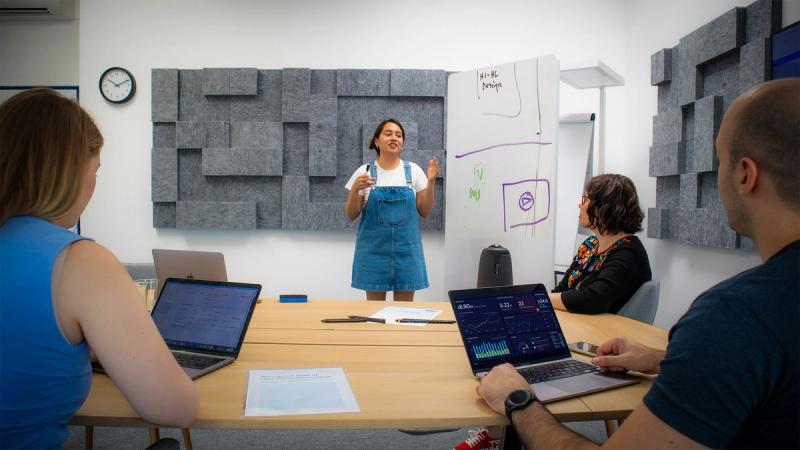
In my teams, we use Feynman’s Technique by asking designers to create and present case studies after each project. Each team member explains their design choices, challenges, and project outcomes in straightforward terms. This ensures that anyone on the team, regardless of background, can understand.
For example, during one session, a designer struggled to explain why we chose a specific methodology. This revealed a gap.
They understood how to execute the method but didn’t fully grasp why it was best.
This realisation prompted a follow-up discussion, where the designer explored the principles behind the methodology. In the next session, they returned with a clearer, simpler explanation.
This didn’t just clarify the individual’s understanding—it helped the entire team gain insights and reinforced a culture of learning. Each team member deepened their comprehension and contributed to collective knowledge.
By integrating Feynman’s Technique into these practices, everyone benefits. The team gains a shared understanding, and individuals refine their expertise in ways that benefit the group.
Combining self-evaluation with Feynman’s Technique has major benefits for team development:
When self-evaluation and teaching are part of the team’s routine, a culture of continuous learning naturally emerges. Teams that use Feynman’s Technique aren’t just refining individual skills—they’re creating a foundation for long-term growth, adaptability, and mutual understanding.
Imagine a team where everyone regularly teaches and learns from one another. Members come together to break down challenges, ask questions, and refine knowledge. This environment cultivates trust, fosters psychological safety, and makes each person feel valued.
Aristotle’s insight reminds us that true mastery lies in teaching what we know. By combining self-evaluation with Feynman’s Technique in a reflective team, you turn individual insights into collective strength. This isn’t about achieving perfection—it’s about creating a space where everyone can contribute, grow, and learn together.
Reflect on a recent project, identify a concept or skill that needs clarity, and simplify it for your team. Try explaining it in a meeting or a casual discussion. Use Feynman’s Technique to fill any gaps in understanding, and encourage your team to do the same. Make this practice part of your team’s routine.
As a leader or team member, initiate peer teaching sessions, document project insights, and build feedback loops. By embedding Feynman’s Technique into regular interactions, you foster personal growth and empower your team to be adaptable and cohesive.
Start small, make Feynman’s Technique a habit, and watch your team evolve. When each person shares their knowledge, everyone grows stronger together.
Listen · AI-narratedSummary
0:00Selected from the same topics.
AI makes building easy. The harder problem is creating a system that preserves context, supports judgment, verifies work, and learns over time.

What changes when the distance between a question and what we can create to explore it begins to collapse, and judgment becomes a harder skill?

We cannot predict every way an AI agent might interpret us. The guardrail belongs where interpretation becomes a consequence.
Tell me what you are building, changing, or trying to make better. You do not need a polished brief.
Prefer email? [email protected]
I read every inquiry personally and usually reply within one business day.